
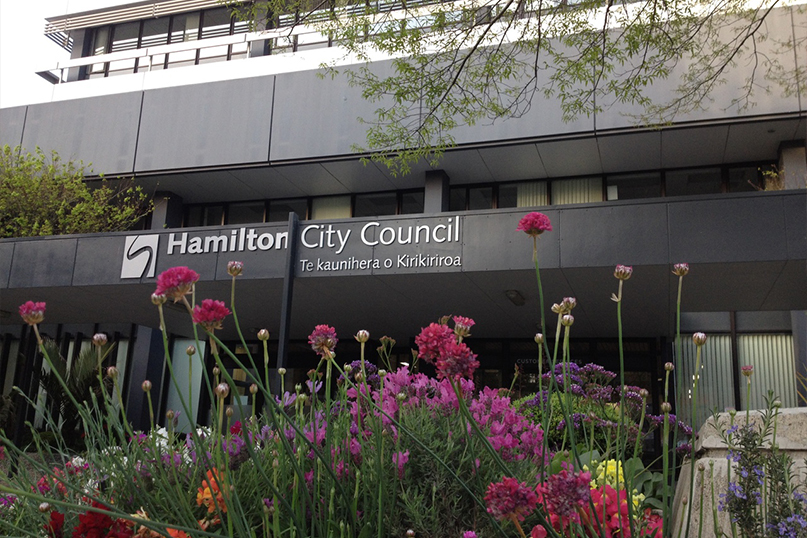
Potential new projects for Hamilton City Council’s 2022/23 Annual Plan will go under the microscope this week.
Changes in the economic landscape and emerging needs and issues are behind budget adjustments and new proposals being considered for Council’s Annual Plan for the upcoming financial year.
The proposals, put forward by staff and Elected Members, include additional funding for improved maintenance of the Burial Lawn at Hamilton Cemetery, bus infrastructure along the high-frequency Comet and Meteor public transport routes, and an initiative to make the Pukete Wastewater Treatment Plant more resilient.
Elected Members will debate which projects make the cut for the draft Annual Plan at a Council meeting this Thursday.
Hamilton Mayor Paula Southgate said while all projects were on the table for discussion, Councillors are acutely mindful many people in the community were already doing it tough.
“So we are looking at relatively minor tweaks to budgets, not wholesale change.”
Chief Executive Lance Vervoort said staff were committed to delivering what is in Year 2 of the 2021-31 Long-Term Plan.
“We’ve told the community what we’d do in 2022/23 and we’re sticking to that. We’re also an agile organisation working in extremely dynamic economic and social environments. Staff have been working hard through the business cases for these new projects – why Council is considering each of these and the funding impacts.
“I’m excited to see what the final plan looks like and what we’ll be doing to continue to improve the wellbeing of Hamiltonians in the next financial year.”
Among the proposals is a health insurance package as a means of attracting and retaining staff, with an annual financial impact of $1.3 million.
“We have a large workforce with sought-after skills in niche roles,” said Vervoort. “We’re often vying for staff with other, larger councils as well as the private sector, in a very competitive market. We need to look at how we can attract and retain staff, and health insurance is consistently the most sought-after employee benefit after remuneration and flexible working. Retention rates can be higher than 70% for employers who provide health insurance. We need to think differently.”
The budget adjustments for the Annual Plan are in response to external factors, primarily inflation and the impact of COVID-19 on supply chains and staffing levels.
“COVID-19 means some projects we were expecting to deliver in 2021/22 will need to be pushed out to 2022/23 or beyond,” said Vervoort. “Council will also need to think differently about how we will deliver what we have promised when we know inflation is above what was expected.
“While Council is experiencing some cost increases now as a result of the current inflation pressures, this is likely to be felt in the future as we enter new contracts.”
Following Thursday’s meeting, staff will prepare the final budgets and work programme for the Annual Plan for approval on 25-26 May, before it’s officially adopted on 30 June.
The 2021-31 Long-Term Plan sets out an average rates increase of 4.9% in 2022/23, with Council’s forecast debt-to-revenue ratio at 238%, a -$2 million balancing the books position, and net debt of $876 million.