
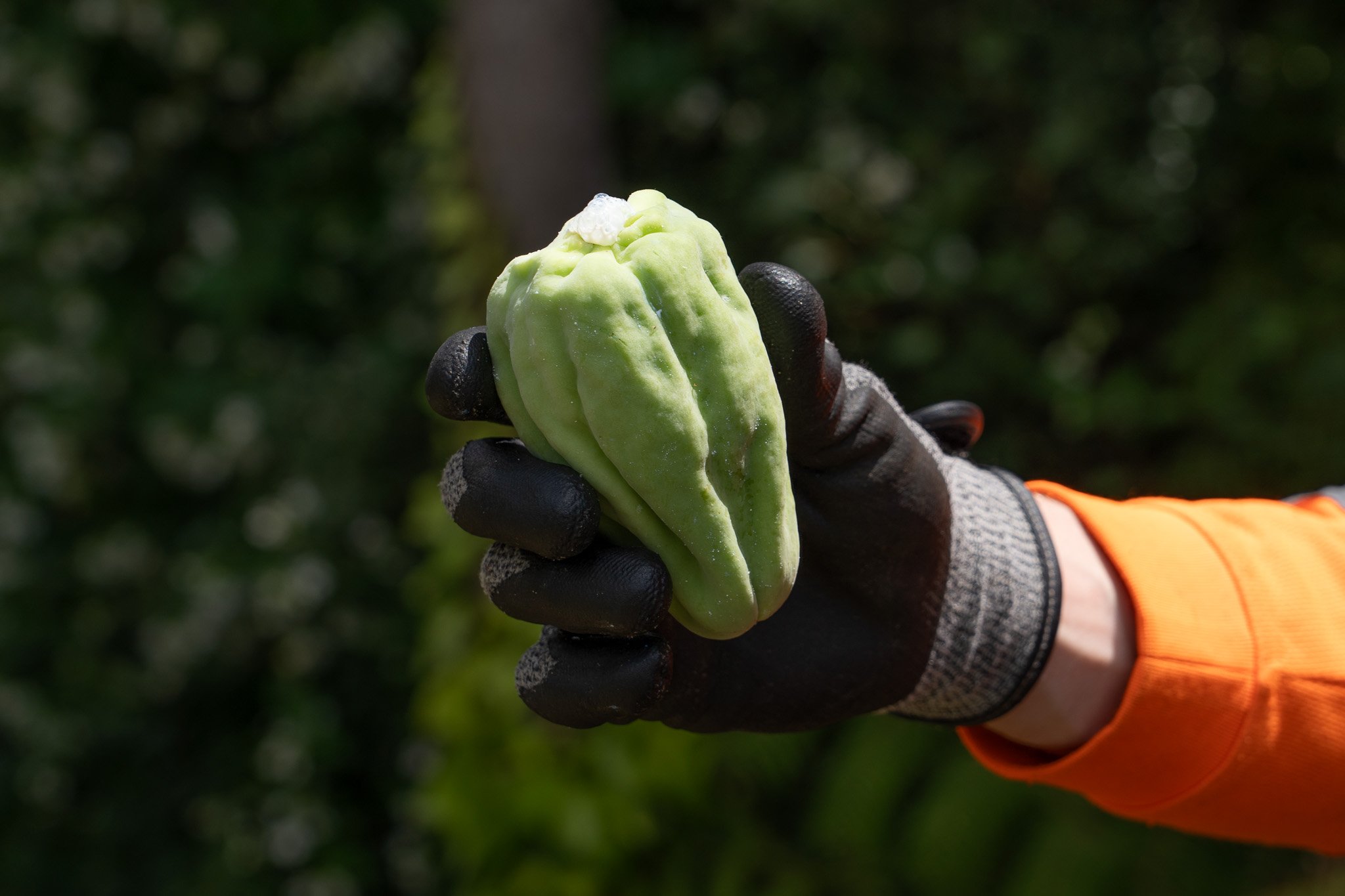
Hamiltonians, have your gloves and rubbish bags at the ready – Nature in the City’s moth plant competition is back for a second year.
The moth plant weed is a fast-growing vine that can rapidly smother and replace native vegetation. Often mistaken for the fruit choko, moth plants form large pods, containing thousands of seeds. Once pods open, the seeds can be carried great distances in the wind.
Starting this Sunday 1 March and running until Saturday 16 May, the moth plant competition aims to get residents on board to help tackle the troublesome weed, by collecting as many pods and vines as possible from backyards, parks, and gullies.
Hamilton City Council Community Restoration Advisor Aimee Nooyen said the Nature in the City team is excited to be running the competition for a second consecutive year.
“Last year, Hamiltonians collected an incredible 6794 pods, preventing more than 4 million moth plants from germinating. This was a huge win for our natural areas,” she said.
“This year we’re hoping to see even more people out and about, collecting pods and vines. Not only will this mahi do great things for our environment, but it will also put people in the running for some really epic prizes.”
This year’s competition features school and open categories, with prizes worth over $4500 on offer, thanks to sponsors Mitre 10 MEGA Te Rapa and Ruakura, Jumpflex, Daltons, and Waikato Regional Council.
“Controlling pest plants like moth plants is an important focus of our Nature in the City programme, which aims to increase Hamilton’s native vegetation cover from 2% to 10% by 2050. To achieve this ambitious goal, we really need every Hamiltonian to be on board and do their bit to help care for our natural areas.”
To enter the competition, Hamiltonians need to collect moth plant pods and vines (including roots) from around the city, photograph them in countable rows, and upload the image with proof of identity at hamilton.govt.nz/mothplant. Once entries have been received, Hamilton City Council will arrange for a staff member to collect and safely dispose of the pods and vines, which must be in a sealed rubbish bag for collection.
Nooyen reminded participants to take care when removing moth plants.
“The sap is poisonous and can irritate skin, so gloves, long sleeves, a mask, and eye protection should be worn. And please don’t remove plants from unsafe locations like busy roadsides or train tracks – these should instead be reported via 07 838 6699 or the Antenno app.”
For full competition information visit hamilton.govt.nz/mothplant.