
Who looks after roads?

Connect Hamilton is our partnership with Downer NZ Ltd, who takes care of the maintenance of the city’s roads, footpaths, traffic lights, streetlights, signs, guardrails, sweeping and vegetation. No matter how you travel, the roads and facilities should be in good condition and safe to use. Connect Hamilton completes regular monitoring and maintenance work, depending on what the road corridor needs. The three main types are: 

  • maintenance 
  • renewals 
  • streetscapes, sweeping, and sumping. 

NZ Transport Agency Waka Kotahi is responsible for all maintenance and operational aspects of the state highways (i.e between the kerb lines) to promote safe, efficient and reliable travel. The NZ Transport Agency also co-funds most of Hamilton City Council’s transport activities, including maintenance and new projects.

Safety first for our road crews

Summer is a really busy time of year for our road crews at Connect Hamilton as they reseal and rebuild roads across Hamilton. Listen as Ailee Brown gives us tips on how to keep everyone safe at our roadwork sites.

We are people not road cones

Rolling through summer - our resealing season

Our road resealing season typically runs from October to March and is timed to take advantage of daylight saving and the warmer weather.

 During the 2025-26 season, our teams will resurface 32km of roads throughout the city. See our progress via the tracker below.

Council informs residents and businesses of any roadworks on their street ahead of work starting.

Maintenance

Maintenance is a type of work that is planned and reactive. The planned work is based on a minimum Level of Service (LoS) in which we are committed to routinely undertaking a certain activity. The reactive tasks are ones we respond to because of customer requests. It includes activities such as: 

  • pavement maintenance 
  • signs, street furniture and guardrail maintenance 
  • traffic signals and street light maintenance. 

1. Pavement maintenance

Pavement maintenance is where we respond to faults in the road and undertake repairs that will make the road safe again and prevent the problem from getting worse for a time. These types of activities are reactive based on complaints, and our own routine inspections. They are undertaken with little to no notice to nearby residents and road users, as the faults usually require immediate actions to prevent it becoming a safety hazard.

We check for faults, like those listed below, to help us determine what is happening to the road, so we can select the best option for treatment: 

  • cracks in the pavement, letting water into the pavement which can cause potholes 
  • ruts, corrugations, and shoves, which is where the road becomes misshapen 
  • tomos or holes in the road which appear when the road structure is washed away by something underneath or next to the road 
  • texture loss in the surfacing which is normal over time, which can cause a rough ride and a skid hazard. 

These are the most common types of faults that we look for, but Hamilton has 630km of road network, so we also need your help. If you notice an issue such as those listed above that requires our attention, please let us know via the Antenno app or by emailing the details to info@hcc.govt.nz.   

The activities we undertake to repair these faults are varied. The repair we choose is based on the type of pavement we are repairing, the location of the repair, and the speed we need to undertake it and have the road open fully.

Common types of repairs: 


Mill and fill 

The repair process involves grinding (milling) the road surface down, then filling it with new AC (asphaltic concrete) material. Work is usually done at night, to minimise disruptions to traffic and ensure the safety of both road users and our construction crews. It normally just takes one night to complete the work.


Stabilisation 

The repair process involves applying cement to the surface of the road and then mixing the cement into the top layer of the road with a stabiliser or “hoe”, then shaping and compacting the freshly mixed material and reforming the road. The cemented or “stabilised” road is then left to go hard over a day or two, then it is sealed with chipseal.  

Image showing a stabilisation repair in progress

This work is generally done during the day, and from start to finish takes two to three days. 


Digout 

The repair process involves the pavement being dug out with a digger, and fresh material placed in the hole then shaped and compacted to reform the road. The digout is then typically sealed with either AC or chipseal as soon as possible or the following day.  

Image showing a digout repair in progress

This work is generally done during the day, and from start to finish takes one to two days. 


Pothole repair 

The repair process involves clearing away any loose material, then placing an AC-like material that can be handled by hand and is compacted using hand tools instead of large machinery. This repair process is the quickest we undertake, but often doesn’t address the cause and we typically keep returning to these places until we undertake one of the other repairs listed above. 

This work can be done day or night, and from start to finish takes 30 minutes to 1 hour. 

2. Signs, street furniture and guardrail maintenance

This type of activity is done mainly in response to a customer request, but we do pick them up during our own routine inspections. These items are mostly damaged from vehicle incidents and vandalism. In these events, the team will make the site safe within half a day, and then organise repairs and replacement for a later date as we do not keep stock on hand. 

Image showing a team of workers repairing a street sign

This work can be done day or night, and from start to finish it is typically done within a day. 

3. Traffic signals and street light maintenance

This type of activity is done mainly in response to a customer request, but we do pick them up during our own routine inspections. These items are mostly damaged from vehicle incidents and vandalism. In these events the team will make the site safe within half a day, and then organise repairs and replacement for a later date as we do not keep stock on hand.

This work can be done day or night, and from start to finish it is typically done within a day.

Renewals

After a certain amount of time the road maintenance will increase to the point that serious treatment is required such as a surface renewal or rehab. These types of works are planned well in advance and are conducted during the summer months. You should be made aware when there is resurfacing or rehab in your area, with two to four weeks’ notice depending on your location and the potential impact of the works. 

1. Surface renewals or resurfacing

This is designed to “re-waterproof” the surface of the road, similar to re-painting your house. It can be broken down into two common types: 

Chipseal renewal - chipsealing 

This is where we apply a layer of bitumen then a layer of chip (small stones) is placed over this. Sometimes we apply multiple layers of bitumen and chip during this process. This layer is between 5-15mm thick. 

This can be done during night or day, as long the weather is dry and the temperature is high enough. Most sites are completed within a day. 

AC (asphaltic cement) renewal - asphalting 

This is where we will remove the existing road surfacing through a process called milling. We then replace the surface by paving fresh asphalt. The AC surfacing is between 40–55mm thick.  

This can be done day or night but is typically done during the night. As it is a complex process, some sites can take multiple days. 

2. Rehabs

These are done when: 

  • the road has come to the end of its life, and we need to rebuild the entire road, or 
  • if there is no kerb and channel, we can place more layers on top.  

Rehabs can be finished in chipseal or AC (asphaltic cement). 

Image showing a grader levelling a road

The work can be done day or night but is typically done during the day. It is a complex process, and some sites can take multiple weeks. 

Whenever we work on a road resurfacing or rehab, we try to incorporate as much work as possible such as drainage improvements, other repairs, and safety upgrades and changes to line marking. This approach meets the expectations of Hamilton City Council’s Access Hamilton transport strategy. The aim is to be as cost efficient as possible across multiple projects. 

3. Renewals – line marking

A week or two after the new road seal has settled in, it’s time to paint it with new line markingAt some locations, for safety, line markings are painted as soon as possible after resealing the road. The lines are then redone where necessary when the new surface is fully settled in. The line marking also gets renewed periodically with the network having a fresh coat every three years.  

Streetscapes, sweeping and sumping

1. Vegetation management

There are plenty of gardens in Hamilton and someone needs to look after them. Our Streetscape Team works year-round making our city beautiful. The team sometimes needs traffic management while they work to be safe. 

2. Sweeping – leaf fall

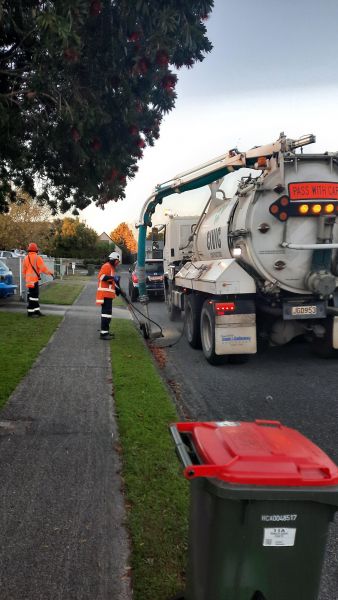
When the season changes from summer to autumn, it signals the start of our leaf fall work around the city. Connect Hamilton operates two or three sweeper trucks to clear leaves from stormwater catchpit tops and grates during the day. Staff also use blowers to clear leaves from footpaths. This work normally starts mid-April and runs through to July. The roads are monitored for leaf fall and staff make regular checks during the leaf fall season. The team also responds to customer service requests for street and footpath sweeps. 

3. Sumping – clearing grates and catchpits

In preparation for those winter months, or a wet summer, we aim to prevent flooding by conducting regular maintenance on the catchpits and grates by clearing the sumps and keeping them functioning.

Image showing a sumper cleaning out a catchpit

What city streets will be resealed during the 2025/2026 construction season?

We’ll be resealing the following streets before Christmas:

Arkle Place

Beverley Crescent

Brookfield Street

Brywood Rise

Cedar Place

Clark Place

Colman Street

Colquhoun Place

Darjon Drive

Denz Street

Dominion Road

Douglas Crescent

Duke Street

Edinburgh Road

Ellicott Road/Newcastle Road

Ellicott Road

Ellis Street

Ennion Rise

Fairview Street

Fenwick Crescent

Firth Street

Fox Lane

Fox Street

Gadsby Place

Gilbass Avenue

Goodall Street

Grandview Road

Hamblyn Crescent

Hazelwood Avenue

Hibiscus Avenue

Hillary Street

Holmes Street 

Horsham Downs Road

Huntington Drive

Hyde Avenue

Inverness Avenue

Jennifer Place

Kakanui Avenue

Livingstone Avenue

Lloyd Drive

Lynwood Place

Maitland Street

Malcolm Street

Mansel Avenue

Mardon Road

Marshall Street

Masefield Drive

McDowall Place

Melva Street

Moore Street

Paul Crescent

Peachgrove Road/Five Cross Roads

Powells Road

Pulham Crescent

Quentin Drive

Rhode Street

Rodney Street

Rothbrook Street

Rothesay Place

Sandford Place

Scotland Place

Somme Crescent

St James Drive

Thomas Road

Totara Drive

Vectis Road

Wake Street

Wellington Street


We’ll be resealing the following streets after Christmas:

Albert Street

Anzac Parade

Arawa Street

Aurora Terrace

Avalon Drive

Awatere Avenue

Bankwood Road

Beale Street

Bisley Road

Boundary Road

Bryant Road

Cobham Drive

Cook Street

Courtney Avenue

Crawshaw Drive

Crosher Place

Dalethorpe Avenue

Dawson Street

Denz Street

Edgar Street

Gadsby Place

Grantham Street

Grey Street Service Lane #619-#697

Grey Street

Hammond Street

Hazelwood Avenue

Heaphy Terrace

Hukanui Road

Kay Road

Killarney Road

Lincoln Street

Masters Avenue

Moore Street

Mount View Road

Orelio Street

Panair Crescent

Parr Street

Peachgrove Road

Prisk Street

Puutikitiki Street

Queenwood Avenue

Rifle Range Road

Riverlea Road

Ross View Terrace

Scotland Place

St Pauls Road

Te Rapa Road/Garnett Avenue

Tidd Street

Tristram Street

Vesty Avenue

Victoria Street

Vine Street

Please note that the above timings may change due to weather conditions or resource availability. Residents and business owners will be notified ahead of any scheduled works.

What causes a road to fail?

A road can start to fail earlier than its expected lifespan for several reasons.  

  • An increase in traffic volume, such as when a new development opens along the road or when the road use changes.  
  • The weight of the traffic increases through it becoming a bus route or a new business opening.  
  • Failures in the drainage system underneath the road allowing the pavement structure to get wet, or frequent flooding can also prompt the road to fail earlier than expected.  
  • It can also fail when construction in the road disturbs the surface, and the road layers underneath are not rebuilt to the same standard as the original road. 

What is the lifespan of a road?

A road is designed to withstand estimated traffic over 25 years. Road resurfacing typically occurs around the 7–12-year mark. Roads can last longer if traffic volumes are low. 

Why do some roads get resurfaced or rehabbed before others which look to be in a poor

If there are other works planned for a road such as housing developments that will increase traffic, underground service upgrades that require the road to be dug up, or upcoming safety improvements, we may delay the resurfacing or rehabs to occur after, or at the same time as those other works. We do this to be as cost effective as possible. 

We also try to undertake preventative maintenance strategies where possible. These are relatively cheap treatments that are best done on a road that may appear undamaged, to push out the need for a more expensive treatment that was likely going to be required in the next few years. 

When does a road need a surface renewal?

The maintenance history of each road is monitored and once it increases to a certain level it will be selected for surface renewal. These treatments should lower its maintenance for a limited amount of time.   

When is road rehabilitation needed?

After a road is resurfaced several times, and the time between resurfacing and road maintenance lowers, it becomes a candidate for road rehabilitation. This is when the road has come to the end of its life and needs to be rebuilt.  

How do you choose to rebuild the road?

When we design the rehab, we try and balance the following: building the right type of road for the traffic volumes, the time it takes to construct it, and finding the most cost-effective solution. 

Why aren’t all roads changed to asphalt?

Asphalt is just another waterproofing layer, and it doesn’t make the road itself stronger. Using asphalt on a surface makes it more resistant to the wear and tear of large traffic volumes. It may also be used in areas to lower traffic noise; however, it is also a lot more expensive than chipseal, so we try to use it only when it is appropriate. 

Why are asphalt roads usually done at night?

It is normally the best plan to do asphalt work at night when traffic volumes are lower because our work sites become very busy. Also, the asphalt needs to be placed hot, so we need to get it from our plant to site quickly, so lower traffic on the roads is best. A site will be done during the day if the noise disruptions outweigh those other benefits. 

Is chipseal also called tarseal?

No. Tarseal is made with coal tar, which hasn’t been used in New Zealand since 1950. This was phased out in favour of the better performing and easier-to-manufacture bitumen which we still use today. 

Who looks after streetlights?

We maintain streetlights except for those down private lanes, which are the responsibility of property owners (contact an electrical contractor for assistance). Most of our city streetlights use cost-efficient LED bulbs, and the lights are maintained and serviced by our contractors.

  • If a single light’s not working, contact us or report a problem (see how can I? in the related pages list below).
  • If it’s a string of lights, try Wel Networks – it may be a cable issue instead.
  • For issues with streetlights on State Highways, contact NZ Transport Agency Waka Kotahi on 0800 4 HIGHWAYS (0800 44 44 49).

Who looks after state highways?

For issues related to traffic signals and signage on state highways in and around the city, contact Fulton Hogan on 07 847 5127 to report damage.

For signage on state highways outside the city boundary, or street name signage on state highways within the city, contact NZ Transport Agency Waka Kotahi on 0800 4 HIGHWAYS (0800 44 44 49).

Frequently asked questions

What about grass verges, berms and overhanging vegetation maintenance?

Verges and berms
We expect owners or residents of urban properties to mow and maintain the berms (including natural stormwater treatment devices and/or plantings) outside their homes and businesses.

We will only mow berms where:

  • excessive size (exceeding 200m2 of grass) or steep contour makes it unreasonable for the single residential property owner to mow.
  • the property owner or resident doesn't carry out the mowing and a safety hazard (fire, vermin) is created.

The frequency of mowing will be at our discretion.

Contact us first if you want to plant in the berm area. See our Agrichemicals and spraying page if you want to go on our ‘no spray’ register (so we know to skip your street frontage).

Trees, shrubs, overhanging vegetation
Trees, shrubs and plants on your boundary or overhanging the road should be kept clear of the footpath (i.e. 2.4m above or more), so that others can use the path safely. In extreme cases, we can serve notice on property owners who consistently fail to do this or remove the vegetation and recover costs. We’ll trim street trees as needed.

Who makes sure stock fencing along local rural roads is safe?

Farmers are responsible for all fences on their property. The fences shouldn’t block the people’s view of the road or access through it, and they should be made of flexible materials so people aren’t injured if a car runs off the road into the fence.

Related pages

Connect Hamilton

The award-winning partnership between Council and Downer NZ Ltd to ensure Hamilton’s transport, parking and roading…

City wide transport

We're making transportation better and safer by collaborating with you to find transport solutions, maintain strong…

How can I?

Apply, request, report, or pay for all transport related things

Related information

Policies

Share this page

Feedback

Has this page been helpful?
Thanks for your feedback.

Last updated 6 May 2024